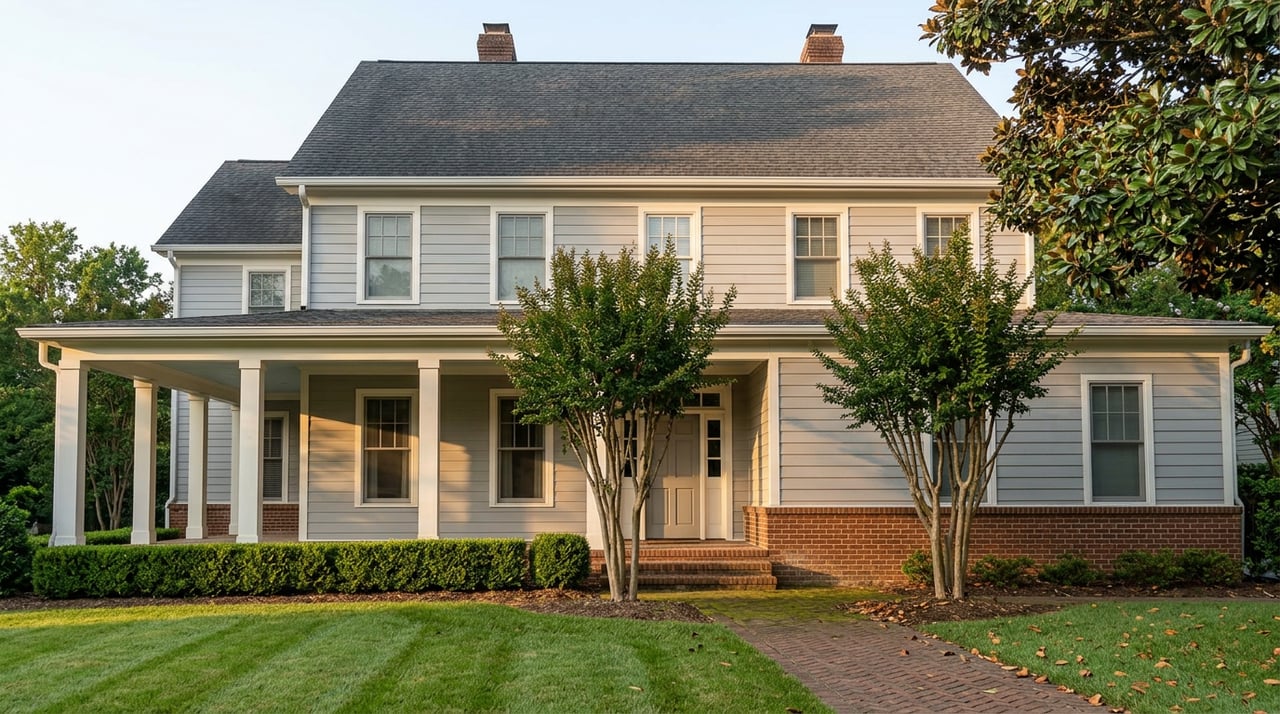
If you've been watching listings at The Cliffs at Glassy, you already know the sticker price. Average list prices in this Landrum, South Carolina community have been running somewhere between $556,000 and $679,000 depending on which slice of inventory you're looking at, with homes ranging from raw homesites in the thousands up to custom mountain estates north of $3 million. That number is real. It's also the smallest part of the actual decision.
Buying a home at The Cliffs and joining the club are separate transactions, with separate contracts, ongoing costs, and timelines. You close on the house. Then, if you want the golf course, the wellness centers, the marina, and access to the other six Cliffs communities, you apply. That second step has its own price tag, and it's not baked into the number you saw online.
The Two Contracts You're Actually Signing
The Cliffs describes membership as tied to property ownership, but tied doesn't mean automatic. After you purchase a qualifying home or homesite, whether it's on the mountain at Glassy or on the water at Lake Keowee, you apply separately for club membership. The community where you bought becomes your home club, and that membership then opens the door to the other six communities as well, which is part of what makes the whole system distinctive. Two membership levels sit at the top: a Golf Membership that includes access to all seven courses, and an Active Membership built for people who want the wellness centers, dining, and social calendar without the greens fees baked in as a daily habit.
What does that second contract actually cost? The Cliffs doesn't publish a single public number, since fees vary by membership type, residency status, and which property you've chosen, and the club directs current pricing questions straight to its real estate team. But there's a real, documented data point that shows the order of magnitude. When The Cliffs launched its corporate membership program, giving non-property-owners a path to the same seven-community access, the terms were a $75,000 initiation fee plus $10,000 a year in dues. That's an older figure from a different membership category, not a quote for what a homeowner pays today. But it tells you the scale you're dealing with. Membership is a separate cost from the home purchase, and current pricing depends on the membership type and property.
The Annual Food and Beverage Minimum
Membership also carries a recurring food and beverage minimum. Under the club's published membership terms, resident members, meaning those with a residence on their property or living within 125 miles of any Cliffs club, are expected to spend at least $1,200 a year at the clubhouses and restaurants. Non-resident members carry a lower minimum of $600 a year. Miss it, and the unspent balance gets charged to your account at year's end.
It's a small number next to a seven-figure mountain estate, but it's the kind of detail that changes how you think about a part-time property. If you're buying at Glassy as an occasional retreat rather than a full-time home, that $600 to $1,200 a year isn't optional spending money for a nice dinner out. It's a bill you're paying whether you show up to eat it or not.
Here's how the full cost stack looks once you set the home price aside:
| What's separate from the home price | Who pays it | What it covers |
|---|---|---|
| Club initiation fee | Buyer, one-time, applied for after closing | Access to all seven Cliffs communities |
| Annual club dues | Owner, ongoing | Golf Membership or Active Membership tier |
| Food and beverage minimum | Owner, ongoing | $1,200/year resident, $600/year non-resident |
| Property tax assessment | Owner, ongoing | Varies based on how you use the home |
The Tax Line That Changes With How You Live There
That last row deserves its own explanation, because it's the one variable that's entirely in the buyer's control and entirely tied to a choice, not a fixed fee.
The South Carolina Department of Revenue states that South Carolina taxes owner-occupied primary residences at 4 percent of assessed value. Second homes, vacation properties, and anything that isn't your legal primary residence get assessed at 6 percent. That's not a rounding difference. It's a 50 percent jump in the taxable value of the same house before the county even applies its millage rate.
The mechanism matters more than the specific number, because every property at Glassy will land somewhere on the same assessment-ratio line depending on how the next owner uses it. A full-time resident who files the paperwork with the county pays meaningfully less than a buyer who plans to use the house three months a year. That's not a penalty. It's the state subsidizing owner-occupied housing over everything else, and it's a genuinely different math problem depending on whether you're shopping for a primary residence or a lock-and-leave mountain retreat.
The advertised price at The Cliffs at Glassy is the beginning of a spreadsheet, not the end of one.
Listing Timelines and Ownership Costs
Independent trackers pulling from local MLS data over the past year have shown well over 100 active listings against something like 30 to 40 closed sales annually, with average time on market landing anywhere from roughly six months to well over a year depending on which data slice you're reading. Club membership and property taxes are additional costs buyers can consider alongside the home price.
For a buyer, the reported inventory and sales figures may point to room to negotiate on the home price, closing costs, or timing around your club application. For a seller, it's the opposite lesson: pricing a home at Glassy competitively means understanding that your buyer isn't just comparing your square footage to the house down the road. They're comparing the total package, and a home that's priced to reflect that reality moves faster than one that isn't.
A Few Questions Worth Asking Before You Write an Offer
Is club membership included when you buy a home in The Cliffs at Glassy? No. Membership is a separate application submitted after you close on a qualifying property. The community where you buy becomes your home club, but the fees and dues are their own contract, not a line item folded into the deed.
What's the real difference between using a Glassy home as a primary residence versus a second home? It comes down to South Carolina's assessment ratio. A primary legal residence is assessed differently from a second home or investment property, affecting taxable value before local millage is applied.
What does listing data show about homes in this market? Independent trackers have reported well over 100 active listings against roughly 30 to 40 closed sales annually, with average time on market ranging from about six months to more than a year depending on the data slice. Club membership and property taxes are additional costs buyers can consider alongside the home price.
None of this is a reason to avoid The Cliffs at Glassy. It's a reason to walk in with the whole picture instead of just the number a portal shows you. If you're weighing a purchase here, or thinking about what your own Glassy property is really worth once all three pieces are accounted for, Team Inglee can walk through the math with you before you write an offer or list a home. Request your free home valuation and let's figure out what the full picture actually costs, and what it's actually worth.
This article is general information, not legal, tax or financial advice. Consult a qualified professional about your situation.